Step by Step Analysis of 737 Crashes
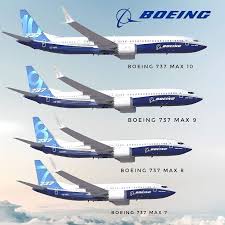
Step by Step Analysis Completed:
First, we started with ten ethical issues for the crisis, posed in the form of questions:
- Should Boeing be able to waive the AOA test results?
- Should Boeing be able to prioritize profit over safety?
- Should Boeing be able to include only limited information about MCAS in the new manual?
- Should the FAA have been able to outsource monitoring and regulating the Boeing projects to Boeing employees?
- Should Boeing have ignored or brushed off the pilot testing feedback?
- Should Boeing have been able to not include MCAS in the manual?
- Should Boeing have to pay extra when adding extra training to the manuals?
- Should Boeing’s middle management have been able to brush off every issue brought up by the engineers?
- Should Boeing have grounded all 737 Max’s after the first crash?
- Should the FAA have grounded all 737 Max’s after the first crash?
From there, we narrowed the focus. We asked: why is the issue critically important to the Boeing 737 Max case and what makes this issue more significant than the other we decided not to use?
- Should Boeing have been able to waive the angle of attack results?
- The angle of attack used by Boeing in their 737 Max planes was known to be routinely faulty, but this meant that MCAS (which relied heavily on the AOA sensor) was also prone to failure.
- Should Boeing have been able to not include MCAS in the pilot training manual?
- If the pilots were trained in how MCAS works, they could have overridden the system and prevented the crashes. This means Boeing did not give the pilots all the necessary information to fly the plane safely. But Boeing had an indirect incentive placed by outside sources to not include the necessary training. Boeing would have had to pay more money if more training was for their new plane.
- Should the FAA have been able to outsource Boeing inspections and regulations to Boeing?
- Outsourcing to Boeing meant the inspection relied on trusting that inspectors would make decisions unbiased to Boeing. This was the last line of defense before the issue interacted with the public.
- Who is responsible for grounding a plane after it crashes?
- If there was a full inspection done on the first plane and the first crash, then they would have found that the crash resulted because of a faulty angle of attack sensor. This should have prompted someone, either the FAA, airlines, or Boeing, to think about what that could mean for other planes of that make and model, thus avoiding the second crash.
- Should Boeing have ignored feedback from the pilot testing?
- The email showing the feedback given from the pilots contains the quantitative, indisputable evidence that Boeing was aware of the potentially faulty angle of attack sensors, but they did not do anything to resolve this.
Please note, I was not in attendance for Week 7. I compared with classmates and included the definitions in my analysis.
Narrowing and becoming more specific with the issues I took a close look at, I detailed what stakeholders affected (primarily, secondarily, and the decision makers), the ASME Canons most relevant, the conflict analysis, and the hierarchy decision.
The ASME Canons are as follows:
- Engineers shall hold paramount the safety, health, and welfare of the public in the performance of their professional duties.
- Engineers shall perform services only in the areas of their competence; they shall build their professional reputation on the merit of their services and shall not compete unfairly with others.
- Engineers shall continue their professional development throughout their careers and shall provide opportunities for the professional and ethical development of those engineers under their supervision.
- Engineers shall act in professional matters for each employer or client as faithful agents or trustees and shall avoid conflicts of interest or the appearance of conflicts of interest.
- Engineers shall respect the proprietary information and intellectual property rights of others, including charitable organizations and professional societies in the engineering field.
- Engineers shall associate only with reputable persons or organizations.
- Engineers shall issue public statements only in an objective and truthful manner and shall avoid any conduct which brings discredit upon the profession.
- Engineers shall consider environmental impact and sustainable development in the performance of their professional duties.
- Engineers shall not seek ethical sanction against another engineer unless there is good reason to do so under the relevant codes, policies and procedures governing that engineer’s ethical conduct.
- Engineers who are members of the Society shall abide by the Constitution, By-Laws, and Policies of the Society, and they shall disclose knowledge of any matter involving another member’s alleged violation of the Policies of the Society in a prompt, complete and truthful manner to either the Executive Director/CEO or any member of the Executive Committee of the Board of Governors or ASME Human Resources who shall promptly notify the full Executive Committee. The Executive Committee shall initially determine whether the alleged conduct shall be addressed through this Policy or Policy 15.4 “Ethical Conduct Violation Procedures” or Policy 15.8 “Conflicts of Interest” or Policy 15.9 “Policy Against Discrimination (Including Discriminatory Harassment) – Members” or Policy 15.14 “Code of Conduct.” There may be situations where actions are taken pursuant to one or more Society Policies.
Going through each of the questions:
1.Should Boeing have been able to waive the angle of attack results?
- Stakeholders:
- Primary: Boeing Engineers & Executives
- Secondary: Other engineers involved, Pilots, Passengers, and the Airlines
- Decision-Makers: Boeing Executives, Engineers, and the Testing Employees
- Canons: 1 & 4
- Conflict Analysis: Canon 1 was completely disregarded because of Boeing’s decision to prioritize producing the plane for as cheap and as quickly as possible.
- Hierarchy Decision: Canon 1 should take absolute precedence, but the financial interest of the company was put above the due diligence expected of a product that puts the lives of passengers in its hands.
- Should Boeing have been able to not include MCAS in the pilot training manual?
- Stakeholders:
- Primary: Pilots
- Secondary: Passengers & Families of victims
- Decision-Makers: Boeing executives * Canons: 1, 2, 4, & 5
- Conflict Analysis: Canon 1 conflicts with Canon 4 because crucial information (the inner working of MCAS) was withheld, directly conflicting with Canon 1. They did not act as “faithful agents”. * Hierarchy Decision: Canon 1 should take absolute precedence and Canon 4 should be respected with all necessary information to all parties.
- Should the FAA have been able to outsource Boeing inspections and regulations to Boeing?
- Stakeholders:
- Primary: FAA & Boeing representatives
- Secondary: Airlines & Boeing shareholders & Pilots
- Decision-Makers: Certification engineers, other engineers involved, and the FAA representatives * Canons: 1, 2, & 4 * Conflict Analysis: Canon 1 conflicts with Canon 4 because safety was not held paramount because there was a conflict of interest to find a loophole for a safety concern. * Hierarchy Decision: Canon 1 should take absolute precedence. The safety of the general public was not held paramount. Boeing and the FAA allowed for bias to influence decisions made that affect not only their employees but also the general public.
- Who is responsible for grounding a plane after it crashes?
- Stakeholders:
- Primary: FAA, Boeing representatives, and Airlines
- Secondary: Pilots & Passengers
- Decision-Makers: FAA Representatives, Boeing Executives, and Boeing Engineers * Canons: 1, 2, 4, & 7 * Conflict Analysis: Canons 2, 4, and 7 were all not obliged by, which conflicted with Canon 1. The public statement following the first crash did not provide all necessary information. * Hierarchy Decision: Canon 1 should take absolute precedence. The safety of the general public was not held paramount.
- Should Boeing have ignored feedback from the pilot testing?
- Stakeholders:
- Primary: Pilots and Boeing Management
- Secondary: Other engineers involved after the test was completed
- Decision-Makers: Boeing Management and Engineers * Canons: 1, 2, &4 * Conflict Analysis: Safety was put second to the plane production timeline and cost. Management should have trusted the industry experts (the testing pilots) rather than sweeping their results under the rug. Canons 1 and 4 were not respected. * Hierarchy Decision: Canon 2 could have been respected more which would have resulted in Canon 1 being upheld.
Once we compiled all these pieces regarding each question, we stated the facts and assumptions for each.
- Should Boeing have been able to waive the angle of attack results?
- Facts:
- Boeing was aware of the faulty AOA sensor.
- Boeing did nothing about the results indicating the faulty sensor. * Assumptions:
- Boeing actively decided to ignore the test results * Justification:
- Boeing should have recorded, investigated, and replaced all known faulty sensors.
- Should Boeing have been able to not include MCAS in the pilot training module?
- Facts:
- There is evidence that Boeing had considered putting it in the manual.
- The training was decidedly not included in the manual.
- Boeing was disincentivised to add the necessary training due to the added cost that airlines require when training is added. * Assumptions:
- Boeing did not opt for the extra training because it required extra time and money. Justification:
- MCAS should have been fully detailed and included in the manual to uphold public safety and welfare.
- Should the FAA have been able to outsource Boeing inspections and regulations to Boeing?
- Facts:
- The FAA allows the expert evaluations to be outsourced to the companies being evaluated.
- The test results showing the faulty system were overlooked. * Assumption:
- The outsourcing occurred because of the lack of use of money and time.
- Boeing was aware of the faulty test results.
- Boeing representatives were pushing a commercial agenda from market pressure. * Justification:
- The FAA should have regulated Boeing themselves rather than outsourcing to the company being evaluated. Outsourcing allows for safety to be ignored and professional interest to be held paramount.
- Who is responsible for grounding a plane after it crashes?
- Facts:
- Boeing and the FAA did not ground any planes after the first crash.
- Boeing came out with a statement to the public ensuring continued safety. * Assumptions:
- Boeing held public image and brand image above the safety of passengers rather than grounding the planes.
- Boeing either ignored the cause of the crash or ignored the findings they found with an investigation. * Justification:
- Boeing should have grounded the 737 Max’s and conducted a formal investigation for the safety of the public.
- Should Boeing have ignored feedback from the pilot testing?
- Facts:
- There were pilots that reported the exact issue before they happened to Boeing that caused the crashes.
- There was email evidence of neglect for the feedback given from the pilots. * Assumptions:
- Boeing chose to neglect the feedback because it would push back the timeline of production and because of market pressure. * Justification:
- Boeing should have held the pilot and passenger safety paramount and respected the expert (pilot) feedback on the product.
Technologies Used:
Back to Projects